All-Sky Multispectral Scientific Imagers
Imagers
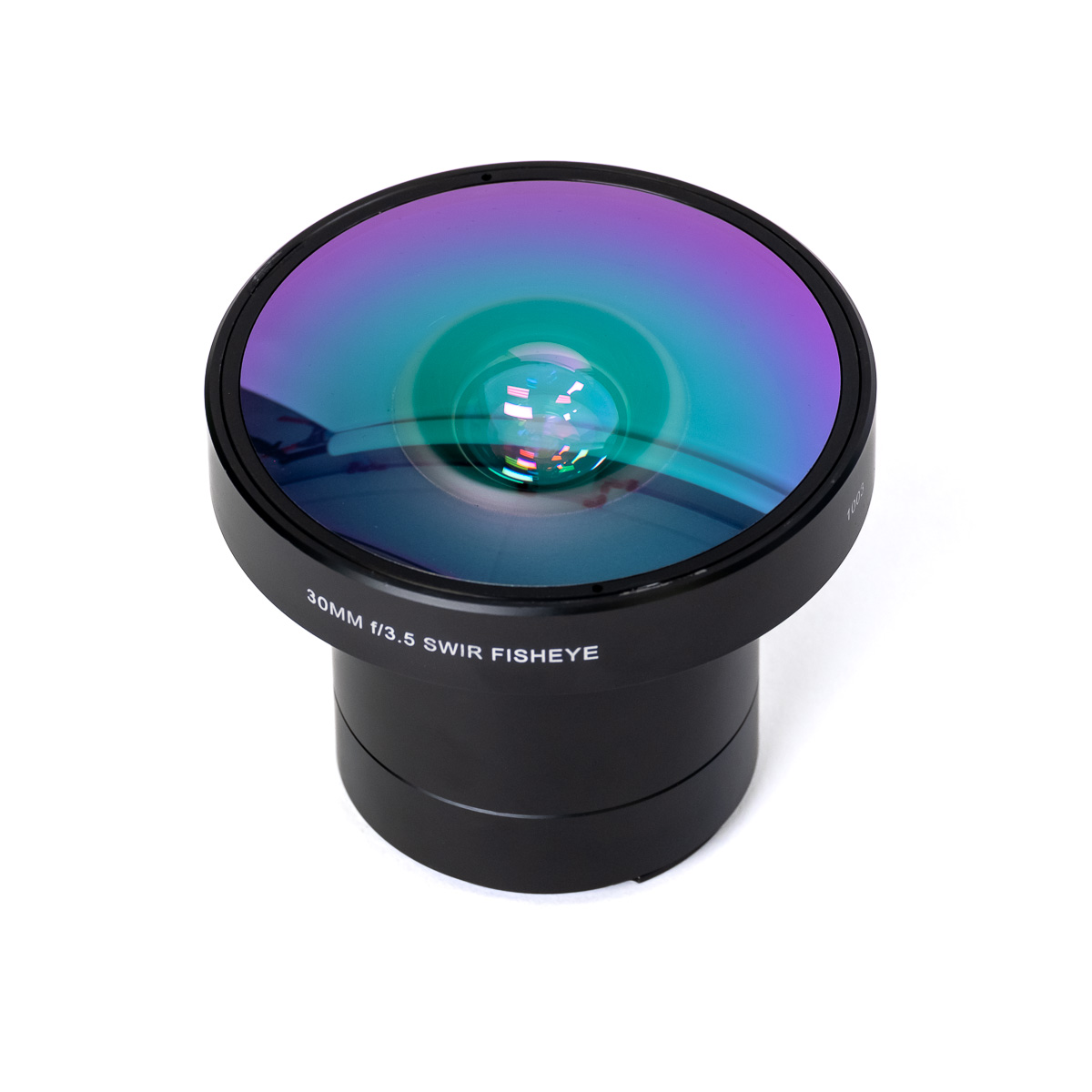
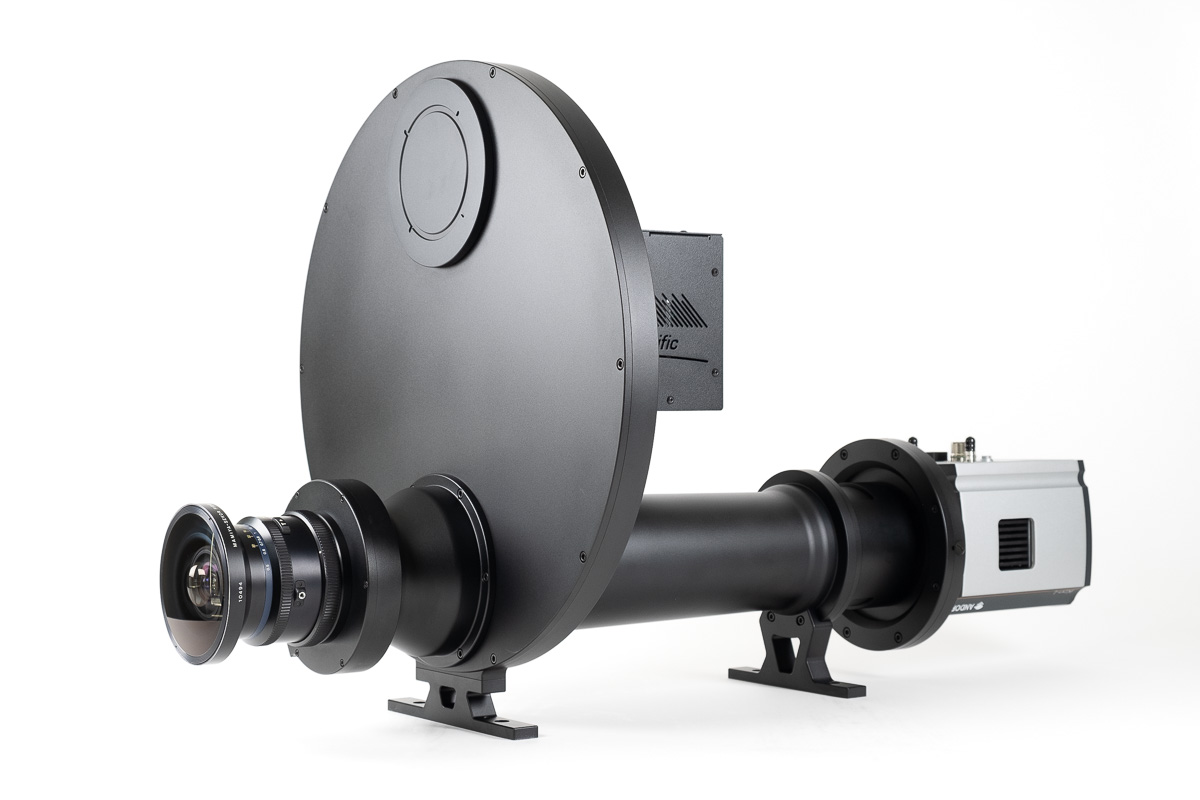
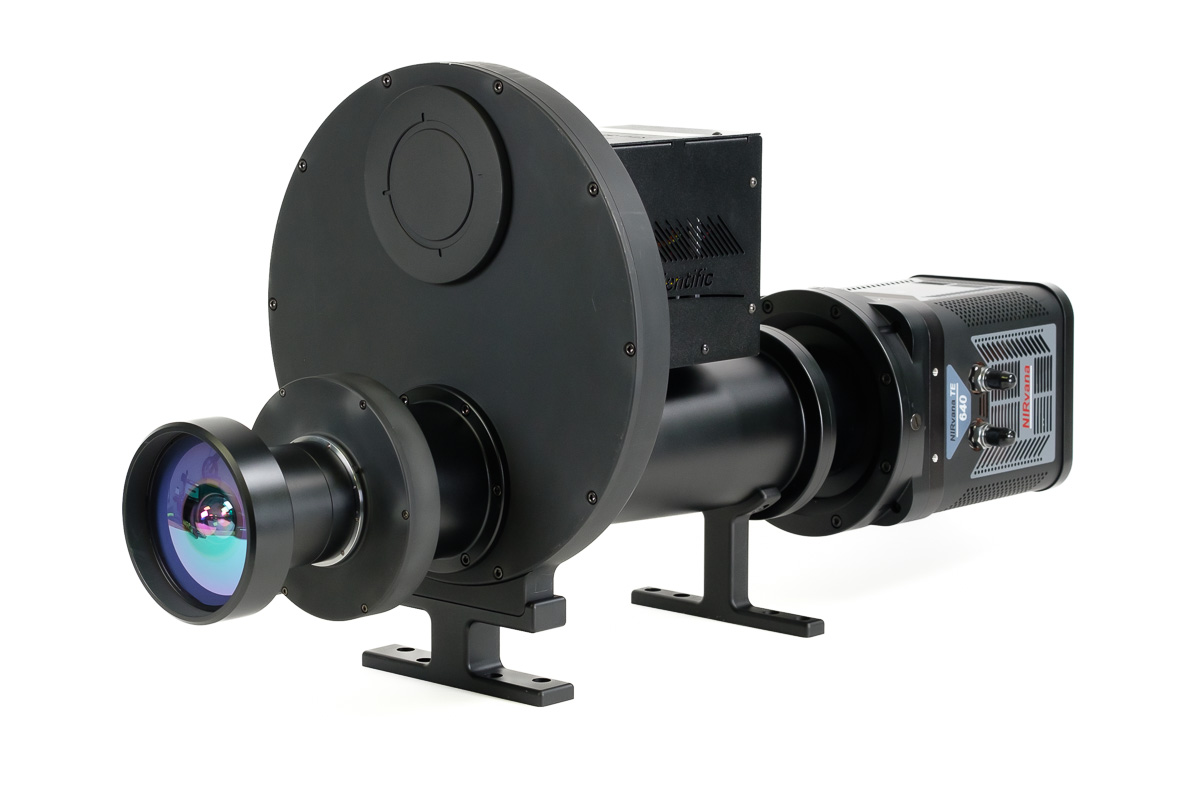
Keo Scientific designs and manufactures highly sensitive all-sky and narrow-field multi-spectral (wavelength-resolved) imagers for low-light-level aeronomy/aurora studies.
Imagers
Imagers are available in many different configurations and can be customized as required to meet specific requirements:
- Fields of View: 8° to 180°
- Wavelength range: Visible to Shortwave Infrared (SWIR)
- Filter slots: single-filter drawer or thermally stabilized multi-filter wheel
- Sensors: Deep cooled CCD, EMCCD, CMOS and InGaAs, in a wide range of sizes
All of Keo Scientific’s multispectral imagers are of the ‘telecentric’ type, allowing ultra-fast (up to f/0.95) all-sky (fisheye lens) imaging through modern interference filters with bandwidths as narrow as 2 nm. For atomic line emissions, a narrow bandwidth and deep out-of-band rejection are crucial for reducing sky background noise and thereby maximizing signal-to-noise ratio.
Frequently Asked Questions
Our Keo Sentry3 imager, equipped with a thermoelectrically deep-cooled, back-illuminated 1024×2024 pixel CCD sensor, is the most popular choice for such work. For the very highest sensitivity and best spatial resolution, a Keo Sentry4 equipped with a large 2048×2048 pixels CCD is the best choice.
For such work, our Keo Sentry3 equipped with a thermoelectrically deep-cooled, back-illuminated 1024×2024 pixel Electron-Multiplying CCD (EMCCD) is typically used. Auroras tend to be bright, and therefore do not typically require the high sensitivity of a Sentry4. Auroras can also be highly dynamic, necessitating the use of sensors with a high temporal resolution. EMCCD sensors can provide the elevated frame-rates essential for capturing such dynamic phenomena. Scientific-grade CMOS sensors are also increasingly becoming an option in this scenario. Our imagers can be configured with a wide range of sensor options. Contact Keo Scientific to discuss your measurement requirements.
Yes, we do! For example, in the case of the Sentry4, standard field-swappable ‘FoV Modules’ with 15°, 30°, 60°, and 90° FoV can be provided. For the Sentry3, standard modules with 8°, 20°, 50°, 80° and 120° are available. We can also design custom FoV modules, such as the 1° FoV Module we designed for the “HAARP Telescope”. Contact us to discuss your particular measurement requirements.
For low-light-level imaging, it is highly desirable to operate at extremely low f-numbers (large aperture). Lower f-numbers unfortunately imply steeper ray angles through filters (which are essentially etalons). This renders the use of narrow-band filters, which are vital for achieving accurate scientific outcomes, unfeasible. Imaging instrumentation from Keo Scientific is uniquely designed to image the sky at the ultra-fast speed of f/0.95 through interference filters having bandwidths as narrow as ~2.0 nm. You may consider our optics to be a f/0.95 Fisheye Lens able to accommodate narrow-band interference filters.
Yes, our hardware and software are specifically designed to operate autonomously and reliably for long periods of time at remote, often uncrewed, observatories in remote locations from Antarctica to the jungle of Sulawesi.
Yes, they do! After the system has been initially configured, our robust industry-grade control software will run unattended, autonomously acquiring data. It is ephemerides-driven and will automatically start and stop data acquisition each night as the sun and moon enter and leave the configured acceptable ranges. Our flagship package is Keo Synopticx GUI-based application, running under the Microsoft Windows operating system. A command-line based Linux option is also available.
Our current lineup of instruments is intended for low-light-level imaging during nighttime only. But we occasionally do get requests for daytime-capable instrumentation. There are viable options (multi-etalon FPIs, SWIR imaging of daytime auroras), for those with adequate budget. Feel free to contact us with your measurement requirements, and we can explore the possibilities together. Also feel free to contact us with your novel ideas, if you are interested in partnering up with us on an instrument development (this is something we have done in the past).
We have in the past provided instruments customized for low-power operation. Please contact us with your specific requirements, and we will be pleased to explore options.
Yes, we do! Keo Scientific can provide full absolute spectral calibration and characterization of imagers, photometers, and spectrographs using our NIST traceable in-house integrating spheres which are custom-built and calibrated especially for the extremely low light-levels encountered in atmospheric and ionospheric research.
Yes, we do! We enjoy working with our clients in remote locations, aiming to ensure both a successful instrument installation and the equipping of their personnel with the knowledge required for safe and effective operation and maintenance of their Keo Scientific imaging instrumentation.
Keo Scientific warrants their products – including the provided CCD/EMCCD sensor heads – to meet published functional specifications and to be free of defects in materials and workmanship for 3 (three) years, starting from the date of original shipment from Keo. During this time, Keo will arrange to have the product repaired or replaced without charge to you. You must return the instrument to Keo for inspection and assessment. You are only responsible for shipping costs to return the product. Some exclusions apply – refer to the individual instrument’s User Manual for full details.