About Keo Scientific
Keo Scientific Ltd. designs and builds highly sensitive scientific instrumentation capable of wavelength-resolved imaging of sub-visual emissions from the upper atmosphere. Imaging systems can be designed to satisfy unique customer requirements, or one may choose from a wide range of highly flexible existing configurations that meet a wide range of strategic, tactical and scientific objectives. In addition to CCD imagers, Fabry-Pérot Interferometers and photometers, Keo has expertise with riometers and radio receivers.
Keo Scientific was founded in January 2004 by a group of Science and Engineering personnel from the University of Calgary. Collectively, this group has experience with the design and use of specialized scientific optical instrumentation going back to the mid 1970s. Keo Scientific's founders have expertise ranging from space and atmospheric research to mechanical engineering to the deployment and maintenance of distributed imaging arrays.
Keo Scientific was started by acquiring Keo Consultants of Brookline, MA from Dr. Robert Eather. Keo Consultants has in the past designed and built camera systems for customers such as the US Air Force, NASA, UC Berkeley, and Japanese, Korean, Italian, Brazilian, Norwegian, Swedish, and Finnish research groups. Dr. Eather's expertise remains available through his current role as Keo Scientific's Senior Consultant.
Keo Scientific is based in Calgary, Alberta Canada. It has a modern optical laboratory facility that supports the design, assembly, testing, and calibration of a wide variety of imaging instrumentation. Equipped with a darkroom, ISO Class 3 Clean Room space, a NIST traceable integrating sphere, and with priority access to a CNC machine shop and a custom lens-grinding facility, Keo is capable of designing and manufacturing optical instruments of unmatched quality.
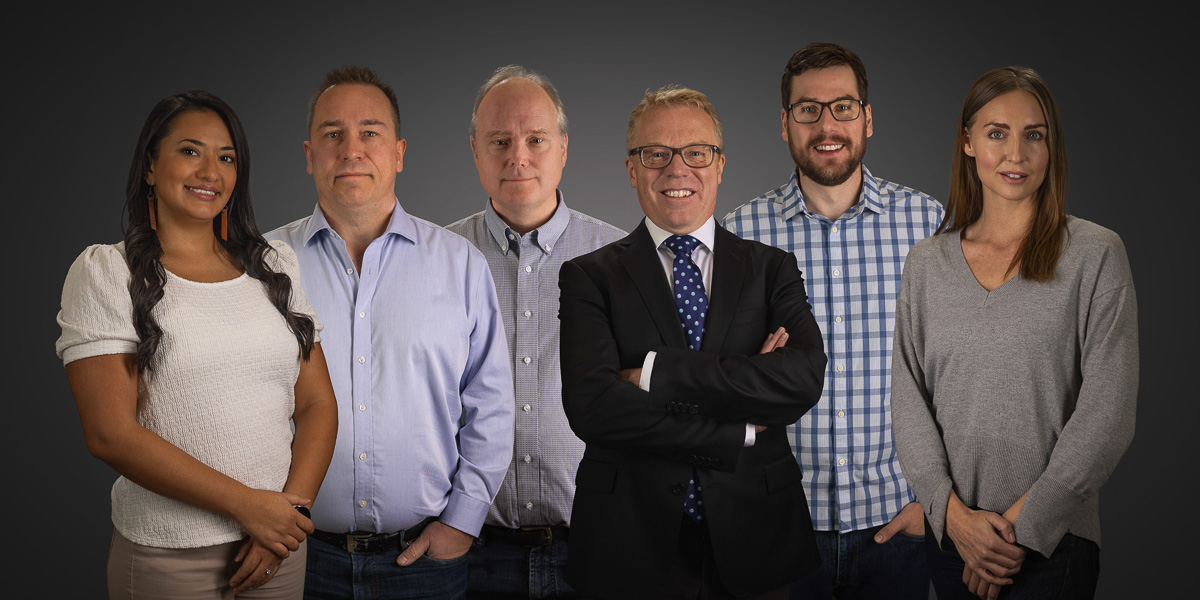
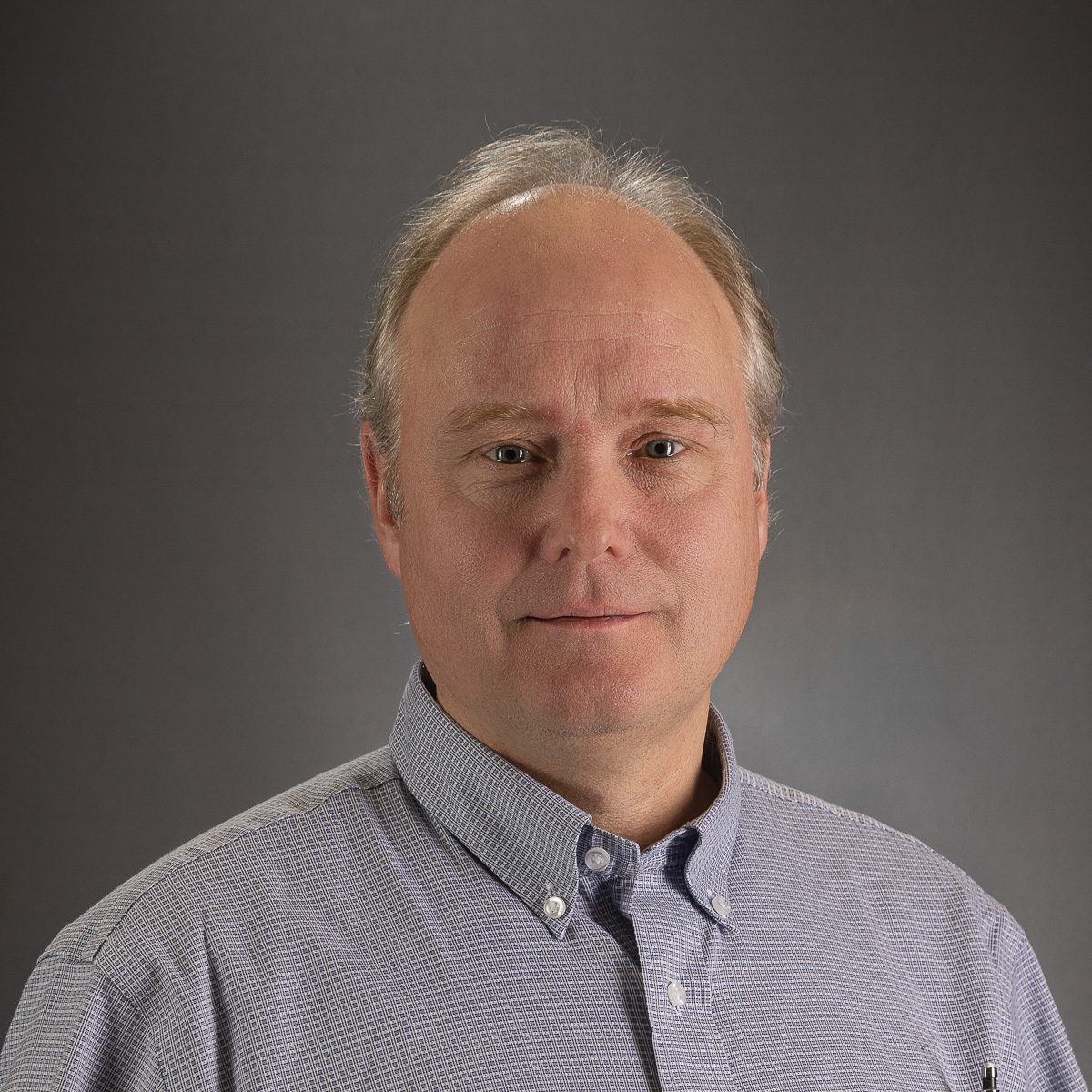
Key Personnel
DR. TROND S. TRONDSEN started his career in the field of scientific imaging at the University of Tromsø, Norway in 1988. There, he designed, implemented, and characterized a computer controlled digital all-sky camera system (Ramfjordmoen All-Sky Imager) for autonomous observation of the aurora borealis. He wrote the real-time control and acquisition software as well as a complete image processing suite at a time when no such program suite was commercially available. He took part in the design of the European Space Agency's AURIO visible and ultra-violet auroral satellite-based CCD imagers. He participated in the design of the far ultra-violet (FUV) auroral imagers on the Swedish satellite Freja, successfully launched in October 1992. He assisted in the design of the Polar Camera (PoCa), a set of two weatherproof imager pods for dual-wavelength observations of the aurora from Eureka, Ellesmere Island. This work included research into weather-proof enclosures, portable and robust data-loggers, image compression algorithms, writing low-level software handling data communication between computer and camera controllers, writing an ephemerides software package, as well as performing the complete mechanical design of the camera units. He was a Participating Scientist on the NASA IMAGE mission (the first MIDEX mission) and assisted with the design of the Wideband UV Imaging Camera (WIC). Dr. Trondsen graduated in 1998 from the University of Tromsø, Norway with a PhD in Cosmic Geophysics, after having conducted all his PhD related research at the Institute for Space Research, University of Calgary. For his PhD dissertation, he developed (optics, electronics, hardware, software) a highly portable intensified imaging system — The U of Calgary Portable Auroral Imager — and applied it to outdoor-based high-resolution (narrow-field) auroral studies in the Canadian north and Norwegian arctic, publishing numerous findings in refereed scientific journals. From 1998 to 2010, Dr. Trondsen worked as an Imaging Specialist at the University of Calgary's Institute for Space Research, designing the NORSTAR (CGSM) multispectral all-sky imaging system (based around Keo Consultants' all-sky cameras), including writing all control and real-time monitoring software. He was Principal Investigator of the Enhanced Polar Outflow Probe (ePOP) mission's Fast Auroral Imager (to be launched 2011), where he spearheaded the optical design, sensor and filter selection, and design of low-noise readout and processing electronics. He was also a member of the U of Calgary-led ground-based segment for the NASA THEMIS mission, which involved deploying and networking an array of 20 all-sky cameras spread out across northern regions. Dr. Trondsen has been a licensed ham radio operator (Advanced Class) since 1983, and studied signal-losses in waveguides at the European Incoherent Scatter Scientific Association (EISCAT) during his MSc days. As well, he worked with riometers, ionosondes, and partial reflection experiment (PRE) radars. He is, as part of his many cultural interests, co-founder of the Masters of Cinema organization. Dr. Trondsen is a Norwegian citizen who holds permanent residency status in Canada and has a NATO security clearance. He is President of Keo Scientific Ltd.DR. ROBERT H. EATHER, the founder of the original Keo Consultants, has designed and developed low-light level (LLL) imagers for auroral and airglow research for almost 40 years. Dr. Eather specializes in LLL optical problems. Research and developmental work has been primarily in the fields of LLL spectrophotometric, photometric, television and camera systems, and associated special-purpose optics. His products range from custom lens systems to complete turnkey imaging and recording systems, including customized software development. Dr. Eather has also conducted basic research into various aspects of the physics of the low-, mid- and high-latitude ionosphere, including correlated experiments using rocket and satellite data. In addition, work has been carried out on optical calibration standards, color image intensification, lidar systems, space debris detection, and Imax/Omnimax cameras and filming. Dr. Eather was the Director of Photography on the IMAX movie Solar Max and he was the recipient of the first AGU Athelstan Spilhaus Award. He was made a Member of the Order of Australia in 2009. Publications: 70 publications in refereed scientific and technical journals on auroral and magnetospheric physics, and LLL optical topics as well as numerous publications in commercial magazines on auroral topics. Dr. Eather is the author of the popular book Majestic Lights: The Aurora in Science, History and the Arts (ISBN 0875902154), and the classic Review Paper on proton aurora, Auroral proton precipitation and hydrogen emissions, Rev. Geophys., 5, 207, 1967.
MR. KEVIN RASMUSSEN manages Keo's business operations. His education as a Mechanical Engineer (BSc from U of Calgary) and an MBA (U of Alberta, 1993) provides him with a unique combination of technical and business skills. This, combined with his experience in the manufacturing, high tech. and professional services sectors, allows him to bring a broad and seasoned perspective to Keo's business and operations. Although the cornerstone of Keo's success is the scientific knowledge and experience that goes into the design and construction of the instruments, Kevin feels that an efficient operational structure is necessary to allow Keo to maintain top-notch quality, reliable delivery schedules, and highly responsive customer service. It is his goal to ensure that Keo's customers are provided with the best possible experience every time they interact with the company - from the initial inquiry to the order, delivery, installation and ongoing support.
DR. SANDY MURPHREE has a PhD from Rice University (1975). His background is in experimental space physics working with datasets obtained from several satellite borne low-light level imagers. Dr. Murphree, a founding partner of Keo Scientific Ltd., has been the lead investigator of auroral imager instrumentation on several recent satellite missions. For example, in 1986 the Swedish Viking satellite carried a new generation ultraviolet imager utilizing advanced image acquisition technology. Global auroral images were acquired as fast as every 20 seconds for the first time opening up the possibility of doing large scale dynamic studies. This was followed by an improved UV imager flown on the Swedish Freja satellite in 1992. Images were acquired every 6 seconds in this mission, allowing high temporal and spatial resolution studies. The datasets acquired represent one of the finest set of two-dimensional auroral images in the world and today provide a unique database for understanding the magnetospheric processes which result in the aurora. He is a founding partner of Keo Scientific Ltd.
DR. LEROY COGGER has a PhD from the University of Saskatchewan(1968). Dr. Cogger retired from the University of Calgary in 1997 and was awarded the honorary titles of Professor Emeritus and Faculty Professor (a designation that recognizes the expertise and continuing high calibre of research being done by some retired Professors). In this capacity, he continues an active research program. Dr. Cogger has for years been the leader of an active research group under the auspices of the Institute for Space Research at the University of Calgary. The research involves ground-based and space-borne measurements of the aurora and upper atmosphere. As part of the Canadian Space Agency's CANOPUS network of ground based instruments, Dr. Cogger was the Principal Investigator of an automated all-sky imager in northern Manitoba from which short-term spatial and temporal variations of the aurora in the auroral oval were studied from 1986 to 1998. This imager was the seed of what later was to become the NORSTAR network of all-sky imagers. Dr. Cogger was the Director of the Institute for Space Research from 1989 to 2002. He is a founding partner of Keo Scientific Ltd.
Website Copyright 2004–2012 Keo Scientific Ltd. Two images on the front page are courtesy of NASA (public domain).